Dr. Gymbro
←

#gut microbiome

2 articles
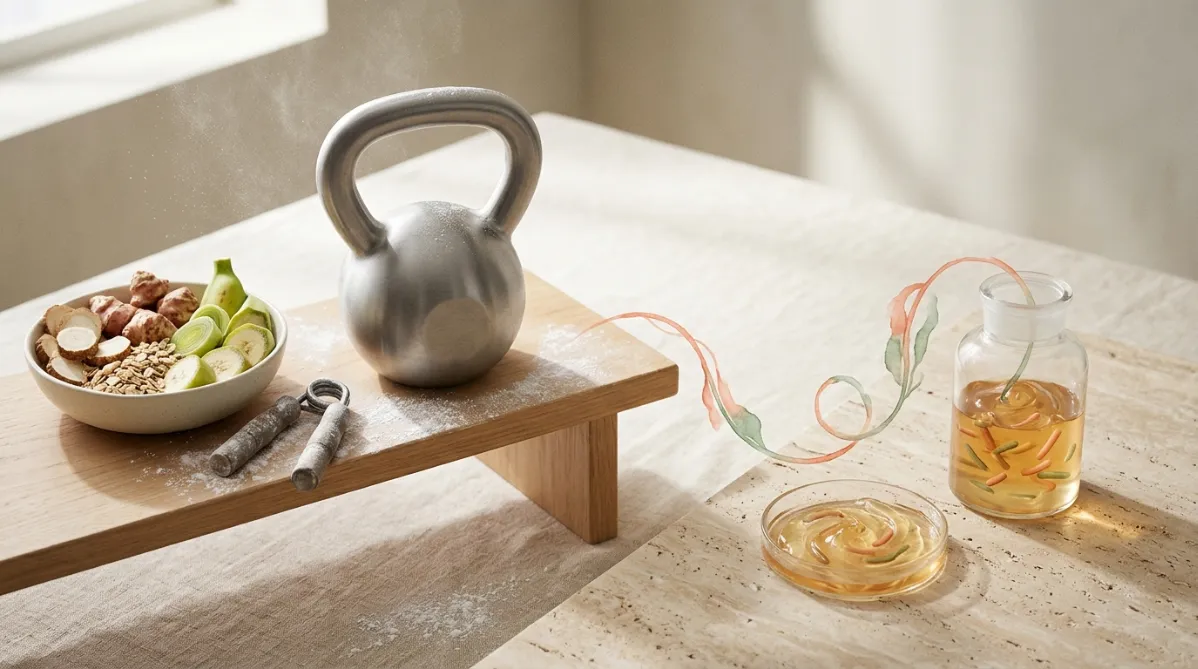
A landscape editorial still life on a soft, warm-neutral background of pale oat linen and light travertine stone. In the center-left, a matte brushed-steel kettlebell and a pair of worn chalk-dusted hand grippers rest on a low pale wooden bench. Beside them sits a shallow ceramic bowl of fermented and fiber-rich foods: sliced chicory root, Jerusalem artichokes, oats, leeks, and a few green banana slices. Soft powdery chalk drifts in the air like fine dust in a sunbeam.

On the right, a minimalist glass apothecary jar and a delicate petri-style glass dish hold a swirl of translucent amber-gold gel with tiny, organic rod-shaped forms. They are rendered as abstract, elegant botanical-looking filaments in soft coral and sage green, like watercolor ink bleeding through water. A single fine thread of this ink-like color curls out of the jar and gently loops across the surface toward the kettlebell, suggesting a quiet connection between gut and muscle without literal anatomy.

Late-morning window light enters from the upper left and casts long, soft shadows with gentle highlights on the metal and glass. Sage green, terracotta, cream, and muted gold make up the palette, with a subtle film-grain finish. The composition is airy, with generous negative space on the far right and top for headline overlay. The shallow depth of field, crisp focus on the foreground objects, and creamy blur behind them give it the polished, modern feel of a wellness and science magazine cover.
science research

与更强举重相关的肠道细菌:Roseburia inulinivorans

BY DR. GYMBRO ·

一种名为 Roseburia inulinivorans 的肠道细菌与人群的握力、腿推和卧推表现正相关;在小鼠实验中补充该菌可提升握力。其他 Roseburia 属的菌种未出现同样效果,而该菌在老年人中的丰度低于年轻人。需注意,因果关系的证据仅来源于小鼠,尚无可商用的益生菌产品。本文概述《Gut》期刊的发现、可能的作用机制以及在科学尚未成熟时的低风险调理建议。
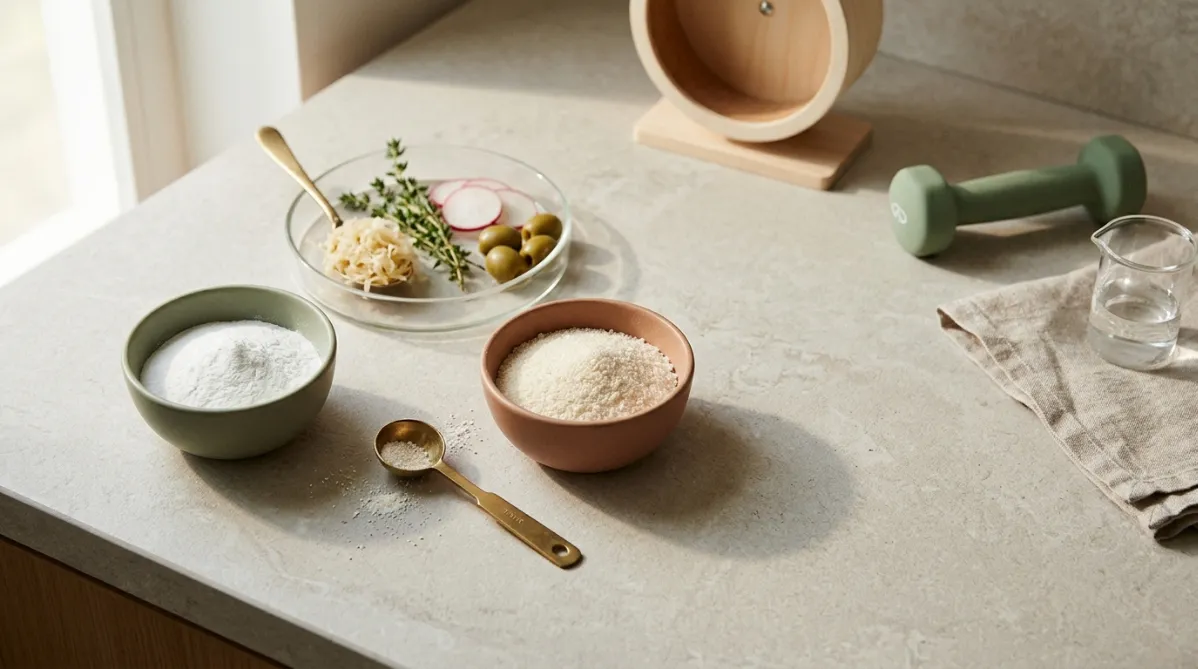
A wide editorial still life on a pale warm-gray stone countertop, lit by soft natural window light from the left. In the center, two small matte ceramic bowls sit side by side. One holds fine white creatine powder, and the other holds a slightly coarser, creamy off-white crystalline powder. Between them, a delicate brass measuring spoon rests at a slight angle, dusted with a few grains. Behind the bowls, a shallow glass dish holds a handful of whole food ingredients that suggest gut health: fermented sauerkraut, a few sprigs of fresh thyme, sliced radishes, and a small cluster of green olives. Their colors are soft and natural. To the right, a minimalist wooden mouse running wheel stands out of focus as a quiet visual nod to the exercise study. Beside it, a small, slim dumbbell in muted sage green rests on the counter. A folded linen napkin in oatmeal tone and a single glass beaker with clear water add a subtle lab-meets-kitchen feel without looking clinical. The palette is calm and modern: sage green, terracotta, cream, soft sand, and touches of warm brass. Shadows are gentle and elongated, with a shallow depth of field that keeps the powders crisp and the background creamy. The composition leaves generous negative space on the right third for title text. The overall mood is clean, thoughtful, and trendy, like a contemporary wellness and science magazine, with fine film-like grain, natural textures, and a refined editorial look.
science research

肠道微生物衍生的 PAS 在小鼠中优于肌酸——但有个陷阱

BY DR. GYMBRO ·

一项小鼠研究发现,来源于肠道微生物的两种分子——哌啶酸和琥珀酸(统称 PAS),在七周递增负荷轮跑训练后,其握力和肌肉力量表现优于肌酸单水合物。令人惊讶的是,两者均未增加肌肉体积或纤维横截面积,优势体现在功能而非体积。两种补剂相较于对照组均提升了跑步表现。但该研究仅限于小鼠,尚无人体剂量或安全性数据。下面是研究的主要发现以及我们应如何解读。

This page is available in